






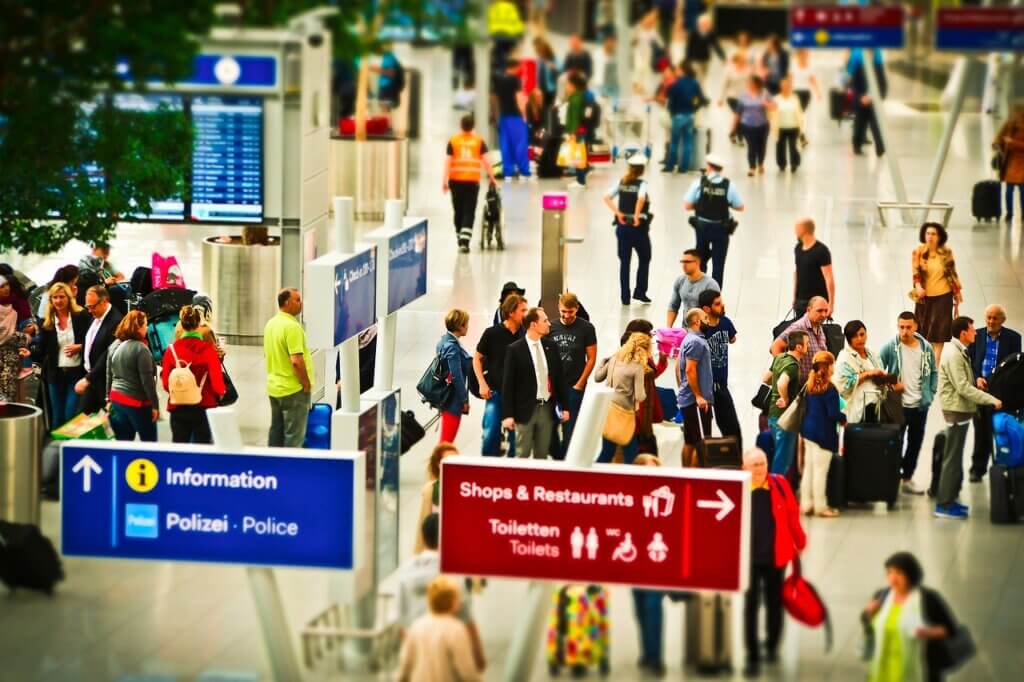
We’ve all been there: You arrive at the airport, excited about your upcoming vacation or the next big step in your life. But often, stress, delayed flights and long waits quickly overshadow those feelings. In some cases, however, these problems are not related to the airlines themselves, but are due to simple inefficiencies in logistics. In this post, you can read about how innovative barcode scanners could ensure that less baggage gets lost at airports and that flights are delayed less often in the future – so that passengers can relax and focus on their actual destination.
In recent months, there have been repeated problems with delayed flights due to inefficiencies in baggage handling and the associated logistics. This not only leads to dissatisfied customers arriving late at their destinations, but also to extremely high additional costs for airlines. As a solution to these logistical problems, modern barcode scanners such as backhand scanners or PDAs could ensure more flexible, efficient baggage handling and also minimize errors. State-of-the-art scanning technologies ensure accurate and fast scanning and, in the long term, greater customer satisfaction at airports.
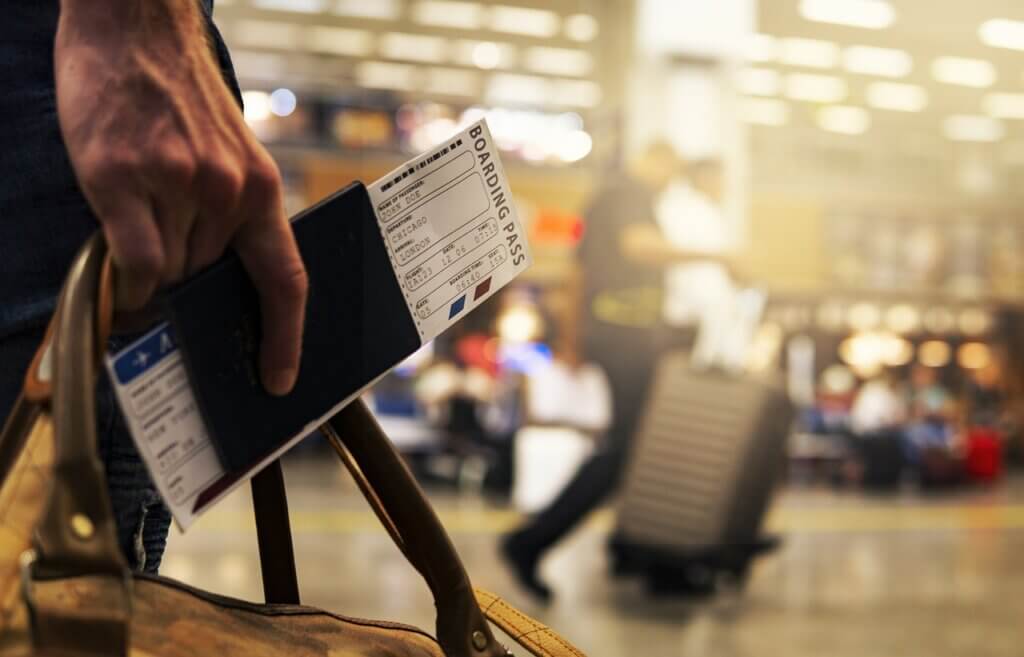
To find out how processes at airports can be optimized, let’s take a look at the current approach:
What challenges do airports face with current logistics practices?
The traditional system for handling baggage and cargo at airports is often plagued by inefficiency: manual scanning and tracking methods regularly cause errors and delays, which negatively impact both the profitability of airlines and the travel experience of passengers.
Airports are struggling with outdated technology that can no longer cope with the increasing volume of passengers and cargo. Lost baggage and flight delays are just the visible symptoms of a deeper problem.
How can new scanning technologies solve these problems?
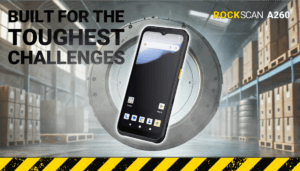
By integrating modern and mobile technologies from WEROCK, such as our innovative wireless backhand scanner Rockscan W100 or the compact PDA Rockscan A260, these challenges can be significantly reduced. The result: smoother operations, fewer errors and happier customers.
Our technology easily reads all 1D and 2D barcodes, making it possible to reduce baggage handling time and make workflows more reliable.
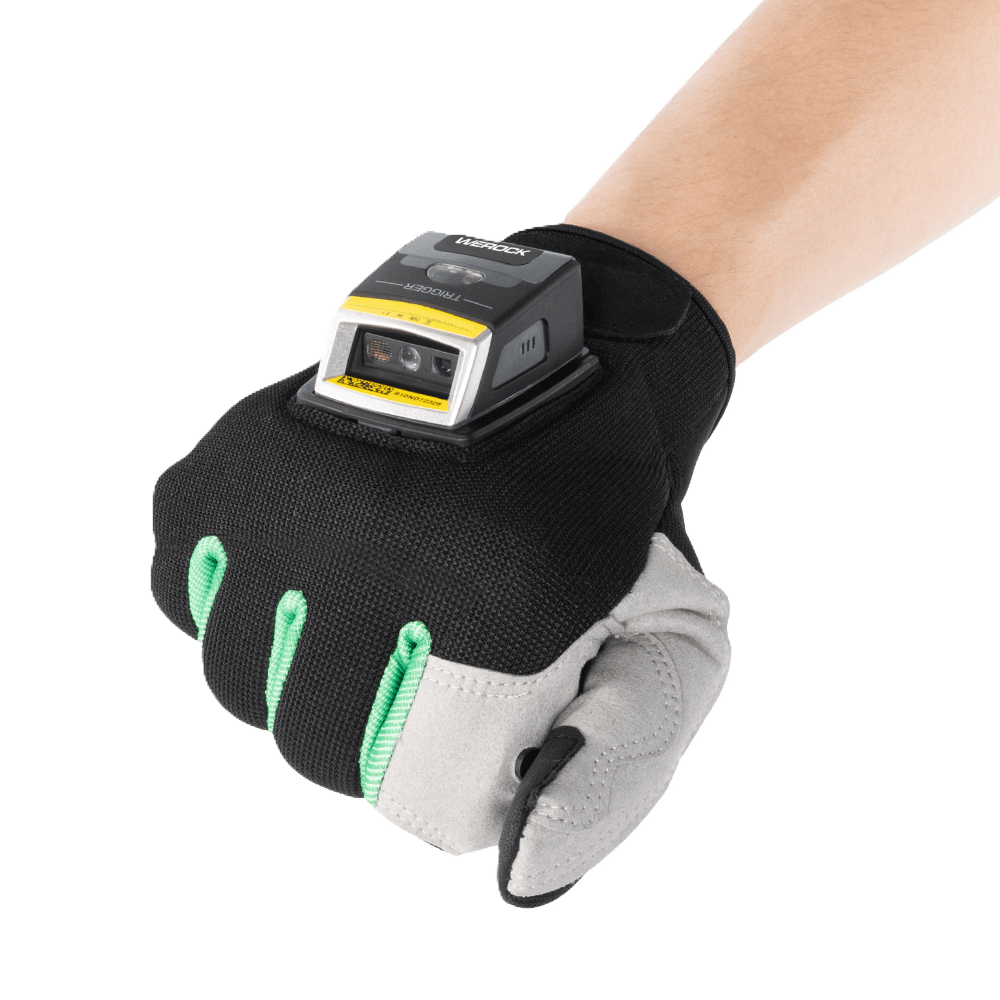
Backhand scanners are small, lightweight scanners that can be conveniently worn on the back of the hand with the appropriate accessories. These high-performance barcode scanners provide maximum flexibility and hands-free scanning. When handling baggage at the airport, they offer a range of ergonomic and practical advantages that significantly improve efficiency and comfort for airport staff.
Enhanced ergonomics
A major advantage is the increased ergonomics. Because the scanner is placed directly on the back of the hand, it enables hands-free scanning of baggage items. This provides significantly improved freedom of movement and reduces the strain on hands and wrists, which makes a considerable difference, especially during long shifts.
Intuitive operation and shorter walking distances
Placing the scanner on the back of the hand makes it both light and ergonomically optimized, making it intuitive and comfortable for staff to use. This means that the scanner no longer has to be laboriously picked up and put down – a significant advantage as it shortens walking distances and speeds up the entire process.
More efficiency through hands-free scanning
Another significant advantage is that the hands remain free during the scanning process, as well as immediately before and after. This allows employees to carry the baggage in parallel or to store it directly at its destination, without interrupting the scanning process or losing additional time. This increase in efficiency ensures smoother and faster baggage handling.
In summary, backhand scanners in baggage handling not only offer ergonomic advantages, but also contribute to greater speed and efficiency in daily operations.
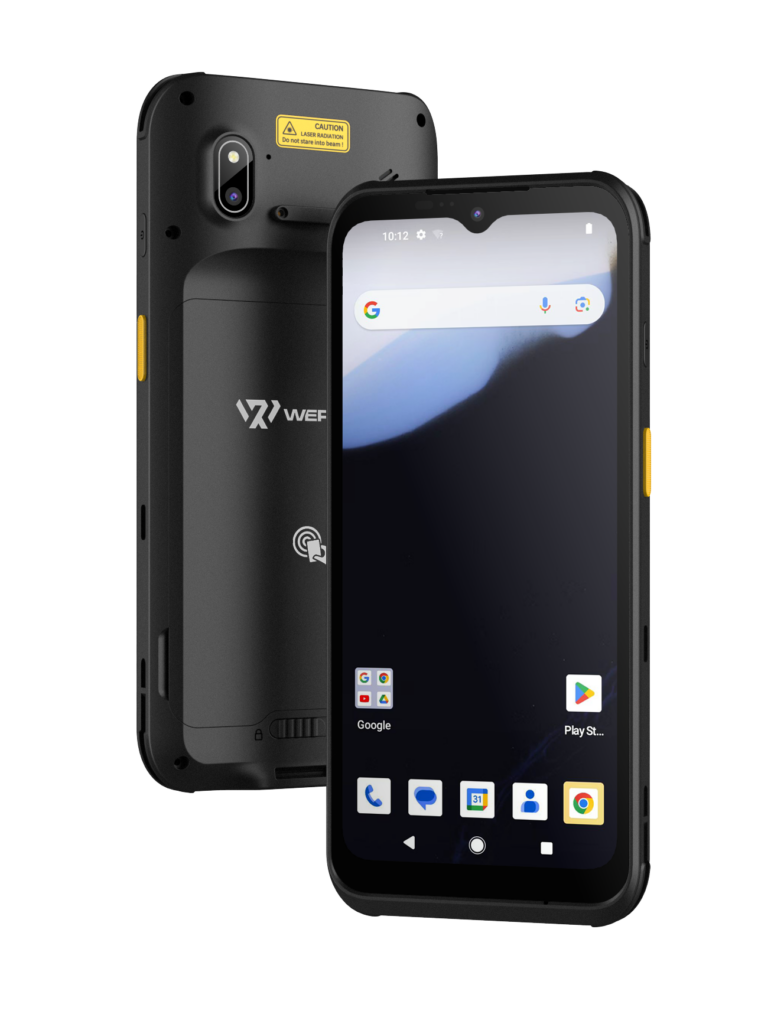
Handheld PDAs (Personal Digital Assistants) are barcode scanners for mobile data collection in a stylish smartphone design. Thanks to features such as long battery life, a robust housing and seamless connectivity, based on Android 14, they are also ideally suited for work at the airport. They are used to make processes more efficient. In baggage handling, handheld PDAs can help optimize the entire process by enabling the quick registration and tracking of baggage. Employees can access real-time information about the location of baggage, reduce sources of error and minimize waiting times for passengers. This ensures more precise and faster processing, which improves airport operations overall.
Summary
New systems such as our backhand scanner Rockscan W100 or our PDA Rockscan A260 could revolutionize a field of work like baggage handling at the airport and ensure more punctual flights, more satisfied passengers and lower costs.
Find out more about our innovative mobile data collection devices here: https://www.werocktools.com/mobile-data-collection/