




The last quarter was marked by many year-end projects, and we would like to thank our customers for their trust. Thanks to the higher inventory levels we built up over the year, we were particularly well-positioned to meet delivery demands. As a result, we had to produce less in Q4/2025, and our production emissions were lower.
Greenhouse Gas Emissions
WEROCK tracks all emissions according to the GHG Protocol, including so-called Scope 3 emissions. The GHG Protocol distinguishes between Scope 1 (direct emissions, e.g., from company vehicles, furnaces, and other equipment…), Scope 2 (indirect emissions directly related to Scope 1—i.e., electricity, steam, heating, and cooling), and Scope 3 (indirect emissions from purchased goods, transportation, waste, travel, etc.—as well as products manufactured in external factories). For the fourth quarter of 2025, our calculated greenhouse gas emissions stand at 105 tons of CO₂e, representing a 63% reduction in emissions compared to the third quarter. As is to be expected from a hardware manufacturer, the largest portion is attributable to upstream and downstream processes, with a Scope 3 share of 93.25%.
Climate-neutralized through offsetting
Unfortunately, computers cannot be manufactured in a climate-neutral manner. However, part of our corporate philosophy is to offset unavoidable emissions in order to be at least climate-neutral on a net basis. To this end, we invest in sustainable projects with high standards that—where possible—meet at least five of the United Nations’ 17 Sustainable Development Goals. You can find out who receives these funds and how they are used in this quarterly climate report.
For the offsetting in Q4/2025, we have selected a Gold Standard-certified climate protection project in Colombia: the “Santander and Las Tapias Renewable Energy Project.” This project focuses on the Santander ceramics factory, a manufacturer of red ceramics based in the municipality of Soacha in the department of Cundinamarca, Colombia. Santander specializes in the production of ceramic bricks, which are primarily intended for the regional market in the Bogotá metropolitan area.
The project mitigates the negative impacts of coal consumption, which contributes to greenhouse gas emissions and climate change and is widespread in the region. Traditional kilns in Colombian ceramic factories typically burn large amounts of coal, and Santander is the only one of 50 factories in the region that uses renewable biomass.
Contrary to established practice, the project optimizes thermal energy by using biomass residues—sawdust, wood residues, and pulp and paper sludge—as the primary fuel source for ceramic kilns, thereby replacing dependence on fossil fuels, particularly coal. By substituting coal with renewable biomass for the generation of thermal energy, this project saves 26,136 tCO2/year.
The project benefits the local community in the following ways:
- Reforestation initiatives: By establishing and maintaining its own tree nursery, the community can grow native trees and plants, thereby contributing to the restoration of local ecosystems and the preservation of biodiversity.
- Donation of bricks and other building materials to a local school in the village of Fuzunga.
- The project supports stray dogs in the region, as there is no rescue initiative or animal shelter in the area.
Impact and benefits of the project
SDG 13 – Climate Action: By replacing coal with renewable biomass for heat energy generation, the project saves 26,136 tCO2/year, contributing to the shift away from fossil fuels—a key aspect of promoting sustainable energy practices.
SDG 7 – Affordable and Clean Energy: The use of renewable biomass, including paper sludge, sawdust, and wood waste, contributes to cleaner and more sustainable energy production and reduces dependence on fossil fuels. This promotes the transition to renewable energy sources and improves energy efficiency.
SDG 8 – Decent Work and Economic Growth: Providing training and capacity-building courses for employees helps develop their skills and improve their growth opportunities in the labor market. This promotes quality employment and the economic development of the community.
Packaging: A small lever, consistently implemented

One positive aspect that remains consistent is that the team consistently prioritizes efficient, compact packaging in their daily work to reduce actual emissions (from materials, volume, and transportation). We did not purchase any new shipping boxes throughout the entire year of 2025. This isn’t a “big bang” solution, but it is precisely this kind of discipline that prevents unnecessary emissions in our day-to-day operations.
Full Year 2025: More Emissions – and Better Data
Overall, a clear picture emerges for 2025: calculated emissions rose significantly again by 65% compared to the previous year. The main driver was the higher production volume.
At the same time, we have noticeably improved the data foundation. Thanks to publicly available data, the level of detail in the CO₂e calculation has increased—moving away from rough kilogram estimates toward more model-based calculations (based, among other things, on system characteristics and electricity consumption). We now utilize these new data sources (e.g., manufacturer and EU data) to the extent that we also publish them on the website for new products.
In addition, the use of AI by employees is now factored into our Scope 1 statistics. This increases transparency—even if it ultimately means we are counting more strictly and consequently seeing higher figures.
Supplier Audit 2025
On average, our suppliers meet 50.3% of the sustainability requirements from the audit—an increase of about 2 percentage points compared to the previous year.
Important to note: Our sustainability criteria become stricter every year. This makes the comparison more challenging, but also more meaningful: It becomes clearer who is seriously committed to environmental protection and improvement processes—and where these efforts are more of an “afterthought.” For some suppliers, it was questionable to what extent all answers were entirely truthful. That is precisely why we will further refine the audit process—less “self-reporting,” more verification, plausibility checks, and on-site audits by our own team.

Outlook
For the first quarter, we expect emissions to remain roughly the same or to decline slightly, as we can continue to draw on the production orders that were already initiated in Q2 and Q3/2025. This ensures better availability for you and lower actual emissions along the supply chain.
Join us on our journey to commit even more strongly to environmental protection.
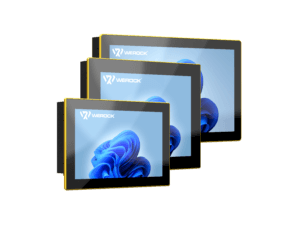
Join us! Equip your employees with durable and robust devices from WEROCK. This provides you with climate-neutral, modern technology that boosts your company’s efficiency. At the same time, we can use our profits to do even more for climate protection. We look forward to your inquiry!