





Guaranteeing food safety and hygiene is one of the key challenges in the food industry. Whether in restaurants, canteens, supermarkets or food companies – regular checks are essential to ensure quality and comply with legal requirements. However, conventional paper checklists are increasingly reaching their limits in the modern world. The solution? Digital checklists.
Why digital checklists?
Digital checklists offer a wide range of possibilities that can be customized depending on the application and objective. Common types include simple radio buttons that allow for quick ticking off of tasks, as well as drag-and-drop boxes that support intuitive sorting or prioritization of items. Free text fields allow additional information or comments to be added, while drop-down menus offer a selection of predefined options. In addition, scale ratings can be used to evaluate conditions or performance, and photo and video uploads allow visual evidence to be captured. Some checklists even integrate GPS functions to precisely record locations, which improves traceability and supports quality assurance.
Such checklists can be found in a variety of software solutions and apps that are specifically designed for documentation and process optimization. Industry solutions, for example for food inspections, construction and facility management or quality control, often offer specialized functions.
Time savings and efficiency
Digital checklists enable quick data entry, automatic calculations, and easy archiving of results. Employees can work directly on mobile devices such as tablets, which speeds up the execution of the checks. Many digital checklists have built-in functions that automatically perform calculations such as averages or sums. By automating many steps, employees can focus on their core tasks. Regular control processes can be carried out faster and more efficiently, which optimizes the entire operation.
Error reduction
Unlike paper forms, digital checklists minimize human errors, such as entering illegible data. Mandatory fields and automatic reminders ensure that no important steps are overlooked. Automatic real-time synchronization prevents the loss of essential data.
Real-time monitoring
Digital systems allow companies to monitor their control processes in real time. Managers can view the results immediately, without having to wait for manual handovers or the scanning of paper forms. Deviations from standards or problems are reported immediately, allowing faster action to be taken before major damage occurs. For example, a critical temperature reading during storage can automatically trigger an alert.
Flexibility and adaptability
Digital tools can be customized to meet the needs of a business. New control points or specific requirements, such as checking for particular hygiene standards, can be easily integrated. Whether it’s a small restaurant or a large food company, digital checklists are scalable and grow with a business’s requirements. New locations or additional control areas can be added easily. For companies operating internationally, many digital solutions offer the option of providing checklists in different languages. This makes it easier for multinational teams to use them.
Practical applications in food control
The possible uses of digital checklists in food control are many and varied. When used for temperature checks, digital checklists linked to digital thermometers can automatically transfer temperature values to the checklist. For hygiene checks, everything from the condition of the work surfaces to the personal hygiene of employees can be seamlessly documented. Digital checklists also help to check incoming deliveries for quality and compliance with standards. Cleaning schedules can also be easily planned, documented and, if necessary, tracked digitally.
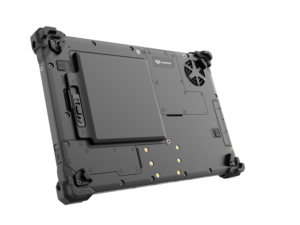
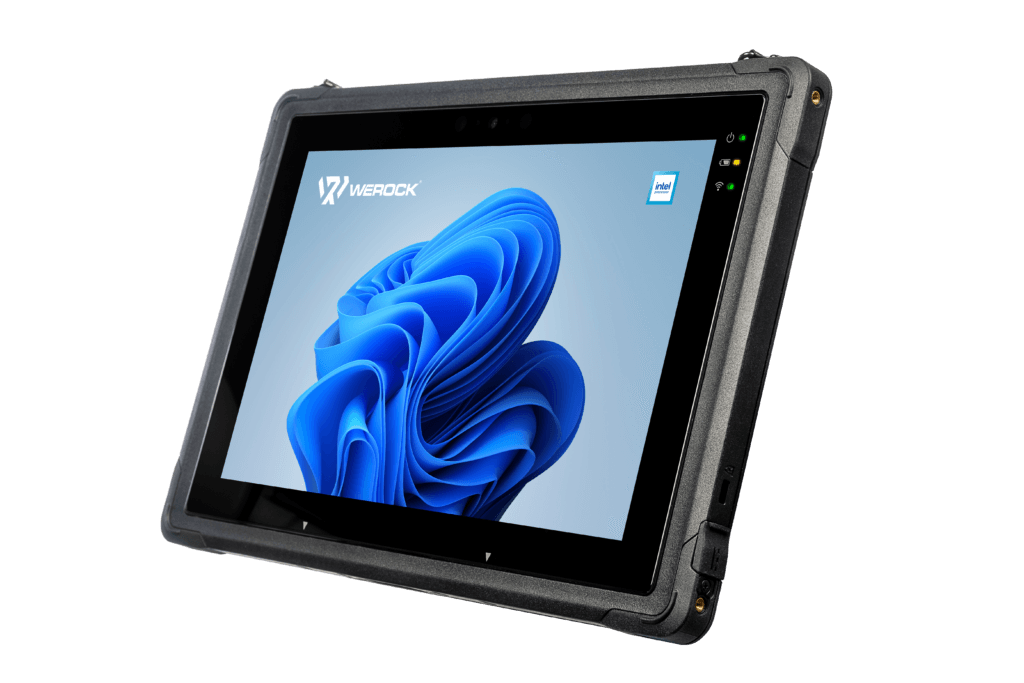
Our Rocktab U210 G2
Our rugged tablet Rocktab U210 G2 is ideally suited for digital checklists in food inspection. It is shock-resistant, protected against water and dust according to IP65, and therefore perfectly suited for demanding environments. With a powerful processor, a long-lasting hot-swappable battery and a bright, scratch-resistant display, it offers smooth operation and optimal readability, even in cold rooms or in strong light.
Sustainably manufactured, it combines efficiency, safety and environmental awareness. WEROCK tablets like the Rocktab U210 G2 are a future-proof solution for modern food companies.
Conclusion
Digital checklists are more than just a practical tool – they are a key to modern food safety. They save time, increase accuracy and improve the traceability of processes. Companies that adopt this technology early on not only benefit from more efficient operations, but also strengthen customer trust and meet the highest quality standards.
Use digital checklists to bring structure and security to your daily work!
Contact us for a free, no-obligation consultation.